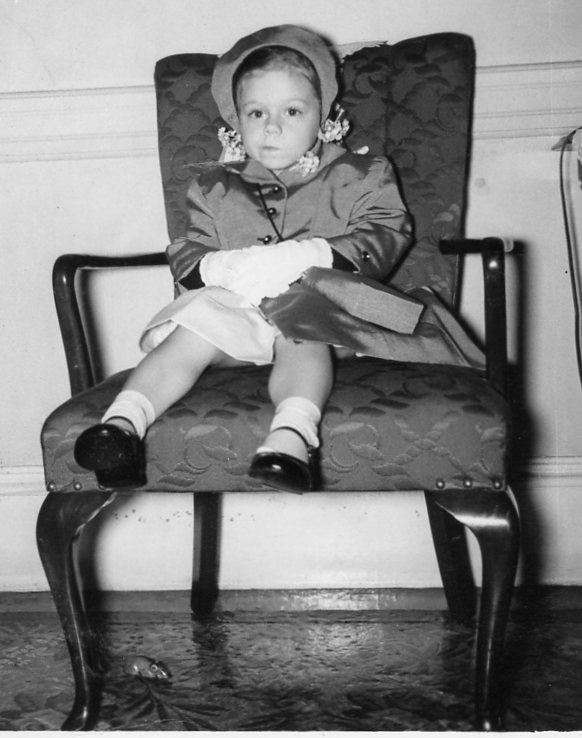
Monday, February 11, 2019

Karma

I should state at the start: I do no woo.  I have no religion other than kindness and believe in no magic other than that wrought by human action.  I do not believe "all things happen for a reason;" rather I believe that all things happen because action B ordinarily follows action A, etc.  I do no woo but sometimes I observe something like karma.

I had a cat named Karma once.  I adopted it from the campus of a local college where it was feral and hunted by animal control.  The cat was no end of trouble for me.  I do believe she hated me.  I kept thinking that I deserved better for saving her, but I never got it from her.  Karma would hold that my kindness went toward the sum total of my actions and would ultimately play a role in what the future would return to me. 

Maybe.

I have long said that I have the best bad luck of anyone I know.  It happened again this week.  I answered the call from yet another geezer in need and spent a week with my brother's ill widow, 15 years my senior.  She lives 400 miles away, and as I get older, my desire to drive on busy interstates under construction lessens and my anxiety at doing so rises.  Also, such travels cost me and I can ill afford extra costs.  But I went.

While there, my tire indicator switched on. The sidewall on one tire was failing.  I needed a new tire.  The good news in that was that against all odds, a mechanic neighbor checked out the situation, recommended a good shop, and told me that only one tire would be needed if I rotated all the tires.  So, while it still cost almost $200, the shop found a matching tire in less than 24-hours and did not delay my return home.  More importantly, this did not happen on the road.

Then I get home, unload my car, and sleep in my own wonderful bed.  In the morning I go out to buy some groceries, finding those I left inedible.  Dead battery.  On the drive home I stopped only once, though I usually stop twice.  I almost made the extra stop but I was so anxious to get home, I just pushed through.  Had I made that extra stop, I would have been stuck.  My dead battery would have likely have required a tow and more money had I needed to replace it along the way. 

See? Good bad luck. My tire could have blown while driving in heavy traffic at 70 miles an hour. My battery could have stranded me at some Podunk hamburger joint. Instead, I made it home OK.

Karma, like beauty, may be in the eye of the beholder. My old cat hated me, but any number of other rescued animals have paid me in love far beyond my karma account's plus column. I have taken care of all my elderly relatives at one time or another, some for years, one or two at great expense.  I cannot say I was paid back, tit for tat.  I can say that after a long marriage and difficult divorce, and giving up entirely on finding love and an equal life partner, that is exactly what happened and for 20+ years my significant other has supported me in all I have wanted to do - from building a pottery studio for me, to helping me keep my house when the recession threatened. My children grew up and are decent, smart, loving people who want me in their lives.  My grandchildren give me much love and enjoyment.

Karma, if it exists, does not give cash payouts or pop up and change one's dead battery.  However, if one lives by the rule of love and kindness to all, one draws into one's own circle the same love and kindness and when the inevitable happens, it may be mitigated by the return of this love and kindness we call Karma.

I don't believe in luck, either, but by saying I have the best bad luck, I can express this mitigation I am grateful to have experienced time and time again.  If we are what we eat, perhaps we have what we do.  This week, I feel like I have everything I need.  Some people say Karma's a bitch.  I say she is a gracious lady.

Friday, January 4, 2019

No Wall - More Facts


I have spent my professional life devoted to discovering facts and reporting them to the public.  I was a journalist and then a science writer. Facts matter.  The truth matters. 

This is why a wall should not be built

The effort to limit drugs with a wall would be ineffective. The heroin that comes across our border is mostly coming in vehicles that come through our checkpoints. This has been reported in USA Today (June, 2014): Most is hidden in vehicles crossing through ports of entry like the bustling Nogales gate. Smaller amounts are carried in on foot by men dubbed "mules," hiking established desert smuggling routes. Some is ferried in by plane or boat.” Also, Politifact, (February, 2018) reports: “Trump’s opioid commission says many users are ordering the pill-form of fentanyl online and having it shipped discreetly. The commission’s report references a Carnegie Mellon University study which found that revenues from online illicit drug sales increased from between $15-17 million in 2012 to $150-$180 million in 2015.

As reported on DELPHI (a behavioral health group) website: “Based on the reports from the 2017 NDTA (National Drug Threat Assessment), there are eight primary Mexican cartels controlling production and distribution through hubs in major U.S. cities. While these illicit opioids are still frequently smuggled across the southwest border of the U.S. in regular cars as well as tractor trailers, it is becoming more common for heroin to be trafficked into the country by air and sea, specifically in the northeast New England area. This is a significant factor in why heroin overdose deaths are clustered in that region since states like New Jersey, Maryland, and New Hampshire are all along major trafficking routes.

The Economist (Nov. 2018) concluded that, “the available evidence suggests that a wall would have no effect on heroin supplies.”

Another myth often touted as a reason for a wall is that thousands of kids are sex trafficked.  Once again, facts matter.  Sex trafficking must be distinguished from human smuggling. The former occurs all over the US with young people tricked or forced into the sex trade.  The latter is the term that implies the transport of people against their will for nefarious purposes, including the sex trade, forced labor, etc.  Conflating the two does a disserve to both groups. Also, people are generally smuggled into the US as forced labor, though trafficking does sometimes involve smuggling. As reported by CNN, June 2017: The National Human Trafficking Hotline shows most reports of human trafficking are from the border states of California (1,323 in 2016) and Texas (670 in 2016) But when you divide the number of reports by the total population, the District of Columbia actually has the most reported cases of human trafficking per capita, according to data from the NHTH.

Next to address the question of what illegal immigration costs the US.  As a reporter I had a love/hate relationship with numbers because, like statistics, they could be twisted.  However, one cannot simply pluck a number out of thin air, as our current president often does.  This is the best I could quickly establish: In Politifact, a 2013 report from Federation for American Immigration Reform, a group seeking reduced immigration came up with the $113 billion figure based on a pool of 13 million people in the country illegally. It includes at least 3.4 million children who are U.S. citizens born to undocumented parents. That total estimate is higher than figures estimated by the U.S. Department of Homeland Security, about 11.4 million by January 2012. Pew Research Center estimated there were 11.3 million unauthorized immigrants in 2014. Even The Heritage Foundation, famously conservative, reported that there are approximately 3.7 million unlawful immigrant households in the U.S. These households impose a net fiscal burden of around $54.5 billion per year. This also includes 4 million children – US citizens – born to illegals in their calculation.

 Also, a report from the Center for Migration Studies estimated that about two-thirds of those who join the undocumented population each year are people overstaying their visa, a situation a wall cannot remedy.

Some conclude that illegal immigration is a serious threat to our country, that a wall is the answer, and our government should be shut down until funding for it is authorized. In light of these facts, I hesitate to draw the same conclusion.  

About 60 percent of the unauthorized population has been here for at least a decade, according to the nonpartisan Migration Policy Institute. A third of undocumented immigrants 15 and older lives with at least one child who is a United States citizen by birth. Slightly more than 30 percent own homes. Only a tiny fraction has been convicted of felonies or serious misdemeanors. This is not to minimize the danger but to put it in perspective.  

Also, a wall would present a serious ecological issue. In Scientific American: KierĂ¡n Suckling, executive director of the Center for Biological Diversity, said even the existing barriers along the border have led to erosion and flooding in border communities as well as a roadblock for the natural movement of wildlife across the border. Environmental groups say that migration corridors are crucial for the recovery and survival of wildlife along the border. As a science writer for the University of Georgia, our scientists often reported on exactly this issue, though usually on a smaller scale. 

My conclusion (opinion) is that this is a complicated, multi-faceted issue and a wall of any description is no panacea. Obviously, more border security in the form of agents trained to find drugs is needed. We should address the cartels, step up air and water protections, and develop a policy that is not “America-First” but multi-national, because the problem is multi-national.  We live in a technological world and need to address online drug sales. We need to consider both human life and our environment because the former is dependent on the latter. 

Ultimately, facts matter.  Science matters.  We cannot afford to throw money at ineffective non-solutions that may even make matters worse.  We have to be smart, not just partisan. 

Monday, September 3, 2018

Thoughts on Retirement

(Not me)
At age 55, I was laid off from the job I had intended to keep until I retired.  My plan was in place: I had two IRAs and a fixed-benefit retirement plan.  Enter the Great Recession and five years of unemployment and I had to spend my retirement savings to just live. So now that I am in my late 60s and actually retired, it is a much more constrained retirement than that for which I planned.

Still, every morning I can get up as I please.  I dress as I like.  I set my own daily goals.  My grandchildren will have many memories of me because I am with them a lot.  It is not what I planned but it is not bad.  My home is paid for, so all I must worry about are the taxes and maintenance.  Ditto for my car.  I get by.

What's more is that I finally have the time to do the things I have wanted to do all my life.  Last year I published a book.  This year I finished the genealogy of my father's family. I am teaching my grandkids how to think, how to write, and hopefully, how to put one foot in front of the other and just live. I have my own pottery studio and though a health problem interferes with my ability to use it often, I have kept it, and sometimes just sit there because it makes me happy to know that I finally mastered this craft I have loved all my life.

Retirement to me isn't traveling around, staying in hotels, or seeking adventure.  It is feeling my own life deeply, being at no one's beck and call, and accomplishing things I value.  Retirement is a kind of freedom - with an expiration date, I know, but still. So I do a little yoga, tend to my dogs, write a bit, maybe throw a pot or teach my granddaughter how to throw.  I shop when the stores are not busy and read at my leisure.  Life is good.


Thursday, July 19, 2018

Breathe in


What does it take to be happy?  A new car? A new job? A new life?  I think most people go through life chasing happiness much the way a dog chases its own tail. That pursuit, in and of itself, runs contrary to actually achieving a state of happiness.

I think we err, not by wanting to be happy, but by not understanding what happiness really is. We mistake the high we experience when in certain circumstances, such as when we get a raise or a new toy, for happiness.  I would submit that indeed, those things make us happy, at least temporarily, but that feeling resides more in the object of our enhanced mood, rather than in ourselves.

Happiness is not so much a high as it is an intrinsic sense that all is well. I prefer to call this state contentment.  For it is the sense of dis-ease that disrupts us.  It is our own striving to always have more, to have better, to do more, to experience more that undercuts what we already have.  When one understands one's own riches now, that striving ceases, and one marvels at the world as it is, rather than as we would make it.

It is easy to be distracted from this contentment when the car breaks down, the child is ill, the house needs repair, or any such thing.  It is understandable that these things yank the comfy rug out from under us and leave us discontent.  However, when we address the situation and look around, we most often see that not all is lost and that indeed, the ground on which we stand is still firm. This attitude adjustment does not ignore what needs our attention.  It simply puts things in their place and gives us perspective.

It is easy to think that with enough money to fix your car, house, life, etc., you could easily be happy, and indeed, financial stress is a chief cause of unhappiness.  Studies have shown that a moderate income overcomes this, but a large income brings additional stress.  The trick, if there is one, is to understand what one actually has.  Focus on that, rather than on what is missing, and contentment grows.

We can chase our tails seeking happiness or we can simply be content with who we are, what we have and the opportunities that are ours.  Every life is filled with good and bad, loss and gain, meetings and leavings.  As we breathe, we have life.  As we live, we have much.  Keep breathing.


Tuesday, May 22, 2018

Curiosity killed the cat but satisfaction brought him back


About 25 years ago, I made a concerted effort to find out more about my family’s genealogy.  It was a frustrating search.  Not only was I up against old and far-flung records, but many in my family were ill informed at best, or downright devious. At the time, I thought I might find the ship that carried my maternal grandmother here around the turn of the last century but all I uncovered were more questions.

Me, with the next generation.  
Enter DNA testing and in a matter of weeks, I have filled in many blanks. I now know my father’s line goes back to colonial days in this country and originates in either Ireland or Scotland, not Germany as I was told as a child.  While a noted Civil War general I had been told was my great-grandfather, is not, I have many soldiers in my father’s line going back to the American Revolution. 

My mother’s line is still mysterious, due less to deflection than to distance and language.  Her parents immigrated here separately from Ukraine and no family lore or records exist – at least in this country.  I never did find the ship my grandmother took to come here.  According to my mother, she arrived in Baltimore, but according to immigration records she had to have come in through Ellis Island.  Such “mistakes” can derail a search and make one wonder why this simple fact was gotten wrong.

I have found hundreds of records about my father’s paternal and maternal lines and I have found dozens of distant cousins through my DNA test.  What I will probably never know is the why of all the misdirection.  So, I am doing my best to make it end with me.  I am compiling the records I have found and will make them available to any and all in my family. 

We all do things about which we are not proud.  But those things should not define our lives nor should they color our history with shame.  And they certainly should not confuse our children or their children into future generations.  Whether our beginnings are humble, like mine, with farmers, laborers, and soldiers, or illustrious, we should claim them so that we can see, not just from whence we came, but also how far we have come.

Some sites can track one’s DNA back to ancient civilizations.  Perhaps the most satisfying thing in my search so far has been that my DNA links me to two civilizations known for their pottery.  I have always believed that I had a genetic link to clay because even as a young child, I felt the pull to handle the earth and make vessels.  Long before I could define the word, “potter,” I identified as one and can still recall my excitement at seeing a short documentary on primitive pottery on our newly acquired TV in the mid-1950s. Other girls wanted ponies.  I wanted a potter’s wheel.

Sometime this fall, the sole relative I have discovered on my mother’s side will travel from his home in Russia to Ukraine to do genealogy research into his family.  He will take with him the little I know of my grandparents and try to find out more for me.  I hope he can find something but I suspect my grandparents were of so little importance, and the time was so chaotic, that few records will remain.  While I would love to know more, I feel quite satisfied with where my search has led me. 

The next time I travel to Florida to visit my sister-in-law, I will also meet a third cousin who lives nearby. My parents and siblings are all dead and I am unlikely to live to see another generation beyond my five grandchildren, but I am content knowing that I have finally found the facts – if not the full truth – about my father’s line.  My search led me to answers concerning the likely cause for the lack of reproductive success in my mother’s line.  I carry two mutations, one responsible for my grandson’s defect, and one responsible for neural tube defects, a common cause of spina bifida, and miscarriages.  Knowing this may cause my grandchildren to avoid the pitfalls to which their parents and grandparents were blind.

Some people have asked me why I wanted to know about “all this stuff.”  It doesn’t change anything for me, but it might have, had I known about it sooner.  I might have followed my earliest instincts to create pottery and become accomplished while still young.  I might have avoided giving one daughter spina bifida with the simple addition of the right supplement during my pregnancy.  I might have avoided my several miscarriages.  I might have gotten to know aunts and uncles and first cousins.  Who knows where it might have led? 

The bottom line is that I was curious and now I know.  And I’m glad I know. 

Sunday, April 8, 2018

DNA - What does it matter?

Growing up I got used to hearing, "What does it matter?" from my mother when I would ask about my father's family.  He had used an alias for much of his adult life and I wanted to know why.  I wanted to know when they got married and why my brothers had a different last name.  I wanted to know but Dad died young and Mom wouldn't talk about it at all.

Dad with either my brother Jim or
Floyd. Why was this photo cut?
Was someone intentionally cut out?
In January, I spit into a tube and found out.

DNA has played a pivotal role in my life in the last three years, ever since a grandson was born with an extraordinarily rare genetic defect.  That led me to research the topic and write a book about it.  Things got a lot more personal when I turned the search toward my own DNA.

Through simple records searches, I and a few family members found some answers.  But Dad had intentionally obscured his family line, and when real names and dates are unavailable, it is much more difficult to search documents.  DNA changed all that.

After nearly seven decades of knowing next to nothing about my father's family, I have unearthed his line back into the 1700s, at least.  I have located a few not-so-distant cousins, but unfortunately, most of my aunts, uncles, and first cousins have all died.  I still have a few to track down, but I don't hold out much hope of finding them alive.

In the last year, this took on new urgency for me as I lost both my remaining brothers, my only siblings. I felt the press of time and have devoted more effort to this than may seem necessary to some.  At one point in recent years, I decided to just make up a narrative about my family as the truth was so elusive, but this is so much more satisfying.

I only knew my dad for seven years.  I knew him to be gentle but a stern taskmaster.  I knew he expected me and my brothers to toe the line, do things right, to not cut corners, to be honest, and live right. I now know that stemmed from his own early life of crime and deception, a fact he left out of his narratives. For while he tried to instill in us these virtues, he did so with lies and with subterfuge. Whether he did so out of shame or fear that telling us the truth would burden us with his sins, I will never know.  What I do know is that this cost me and my brothers a family we might have had.

Most of the death dates I have found on close relatives are within the last 30 years.  I might have met them.  I might have liked them.  They might have had stories to tell.  But it is too late now. I believe I may be the only person left who knew my dad, who cares.  And it still matters to me.

Sunday, January 7, 2018

When the impossible happens

Over the years, I have adopted any number of strays, some for days, some weeks, and some, forever. These usually come with problems related to why they are strays in the first place.

Which brings me to Clark.  Clark is a 15-year-old lab/pit mix who arrived in my neighborhood full of spit and vinegar about 13-14 years ago.  He was so fast!  And so destructive.  He would tear up and down the street, rampaging through carefully tended gardens and delighting in finding newspapers on anyone’s front lawn.  These he would toss high into the air, shredding them into black and white confetti, before loping off to the next yard. That is when I named him Clark, after the newspaperman, Clark Kent. Animal control was hot on his heels and he didn’t care.  He was the fastest thing on the street. 


I knew he would eventually be captured and probably killed so I trapped him myself thinking surely, he would warm up to me, to my airconditioned home, to my other dogs, and settle into being a pet.  I was wrong.

Clark had and has a deep distrust of humans. It took me months just to pet him.  In all that time he never came inside. Instead, he claimed my large backyard as his domain, carved out a home for himself under my pottery studio, and made it his mission in life to keep the yard free of all vermin.  I picked up countless dead racoons, squirrels, rats, moles, even hapless cats.  I did not enjoy this carnage, but I did appreciate his work ethic. He also kept my yard free of human interlopers as he is a big dog, black as night, with an intimidating pitty head and a ferocious bark.

Over the years I have tried to tame him, to get him inside on blisteringly hot days, away from the flies, and on bitter cold days.  He would often come to the door, but would never walk through.  I always thought he wanted to but just could not bring himself to take the first step. All efforts to collar him and drag him inside only proved his superior strength and served to frighten him.

As age crept up on both of us, he could no longer make his hips cooperate to go under my studio and he took to sleeping exposed under the overhang of my studio.  He eschewed the magnificent dog house I got for him but would deign to lie upon a dog bed on the ground.  My worry for him finally grew so great I resorted to creativity to keep him warm.  Last winter, I cut the side out of the pack-n-play my grandchild no longer needed.  I padded it well on all sides and put his dog bed in it.  I stuffed insulation under it so no cold wind would find him that way.  He was highly suspicious of this device and dragged his bed out a time or two, but eventually wound up using it.  This winter I added a heavy blanket over the top to try to conserve his body heat.

Since then I have been going out each night with my mother’s old fur coat to cover him up and tuck him in.  I know he has liked that but still, I worried.  This bomb cyclone was sure to kill my aged dog.  As he stood, flummoxed at his frozen water bowl trying to drink, I nabbed him!  I pulled him into my back porch then forced him up the three steps into the house proper.  Though confused, he wandered around and finally lay down heaving a deep sigh by the fire.  That was four days ago, and finally, after all these years, I have gotten him to walk into the house on his own, sleep in my room (still on my mother’s coat) and let me tend to his cancerous leg. 


Yes, he is old, half blind, more or less deft, a little lame, incontinent, and probably in some pain from his leg but this is a happy dog.  He’s decided he loves hanging around with my other black lab, Elvis, even though Elvis can be a bit of a pill at times.  Yesterday when I let him out with Elvis and Sweetie, he raced with joy to the back fence, leaping a little and looking around. After a spin around his domain, he trooped back in like he’d been doing it for years.

Who says old dogs can’t learn new tricks?

Wednesday, November 29, 2017

I can't believe you said that!

The #MeToo movement has uncovered a lot of poor behavior, mostly by men and mostly aimed at women.  There is outrage on all sides, confusion on the part of some men, and an overwhelming sense of “finally!” on the part of most women.

Never one to avoid the fray, let me enter here.

I could list all the personal examples of sexual harassment I’ve endured but I doubt that would add anything to the conversation.  It is enough to say that I believe women when they say they have been groped, propositioned in the workplace or by strangers, intimidated by coworkers, bosses, or others in authority over them, or just raped.  I believe them.

I also believe that most men are just gob-smacked by all this. There are men who would never think of saying or doing anything inappropriate to any woman.  I know a few men like this.  There are probably an equal number of men who are simply gross, taking every opportunity to turn an ordinary remark into an innuendo, getting handsy, spewing “compliments” on strangers, and taking offense when such are not greeted well.  The majority of men fall somewhere in between. 

A woman who smiles brightly is not inviting men to bed.  A woman who passes pleasantries with you is not asking you to grope her.  If a woman is ignoring you, that’s a good sign that you should stop whatever you are doing and direct your attention elsewhere.  If a woman greets your off-color comment with silence, she does not need you to go into detail so that she “gets it.”  She needs you to stop. This goes for women you know as well as for strangers.  It’s not that hard, guys. 

We women are tired of being told how to avoid getting raped.  We are tired of being told by strange men to smile.  We are tired of up-skirting, chest-staring, stalking, and other tasteless behaviors by men with whom we associate.  We are tired of checking our hotel rooms for hidden cameras, and tired of being told how to dress.  It is exhausting, demeaning, dehumanizing, and we have had it!

By all means, tell your coworker she looks great.  But don’t ask if she’s had a boob job.  Ask if she has the report you worked on.  Smile at a stranger and then fix your attention elsewhere.  Don’t be a creep.  It’s not that hard.  And when I say “hard,” you know I mean difficult, so don’t turn it around to the status of your dick.  Not cool.

Women who don't warm up to your unwelcome shoulder rubs, demands to smile, suggestions on how they might dress so they look sexier, etc. are not humorless lesbians.  They are simply uninterested in you!  Shocking, I know. 


The bottom line here is this: just treat women with respect.  That's how real men behave.  

Monday, October 30, 2017

Coat Conundrum


Nearly every woman I know has kept her wedding dress.  Not all have kept their husbands, but the dress is separate, existing as it does, skirting the line between fantasy and reality.  I even kept mine and it was just an eyelet lace dress, not a real wedding gown.  The point is, there are some garments one may certainly outgrow but which never quite make it to the Goodwill bin.

I have a laundry basket filled with such items.  There are favorite shirts, worn at their creases and faded; dresses my late mother sewed for me replete with tiny hand stitches I cannot just discard, and a couple of handmade quilts I earned during my time living in Vermont.  One item stands out. 


When my mother moved in with me in her very old age, she brought her old Borgana coat.  Borgana, or Borganza, as it is sometimes called, looks and feels rather like beaver fur but is a synthetic.  When I was 14 she bought me one and I did not appreciate it.  As a short person, the last thing I needed, especially at that age, was something that added width, subtracted visual height, and made me self-conscious. I accidentally ruined that coat by leaning up against a hot radiator.  Though Mom was angry, she did not replace it with another.  Instead, I got a pea coat, which was what I wanted in the first place.

When Mom died, 10 years ago this month, I got rid of all her clothing the next day.  That sounds unfeeling, but I knew if I kept them, they would only deepen my grief.  Later, I found her coat and could not part with it.  Every year since then I’ve debated what to do with a coat older than my grown children, stylish as pillbox hats, and as likely to be used as the hatpins they required. 

A few weeks ago, I tidied up my office and took the coat out of the closet.  I thought, “It’s time.” So I gave it a little more thought and found the perfect use for that old, beloved, besmirched, coat.  I’m giving it to Clark, my 14 year-old black lab.  Mom liked him; buttered English muffins for him and loved his gentle ways.  But Clark has a quirk.  He won’t come inside the house and in recent years I have kept him warm by creating a bed for him out of an old pack-and-play lined with blankets.  Before I retire for the night I tuck him in.  This winter he gets Mom’s coat. 

I went out last night with it for the first time and tucked in my crazy old dog.  He groaned with joy as he felt the furry warmth surround him.  Even this morning, I saw him return to the bed and nuzzle it happily, preferring it to his usual hole in the ground beneath my bedroom window. 


Somewhere, I think Mom is both mad and smiling that someone finally appreciates that coat! 

Saturday, September 30, 2017

Button Up!

Too dressed up (Thanks, Mom)
As far back as I can remember, I’ve worn shirts.  Not blouses, not tee shirt, shirts.  As the youngest and only girl, I was sometimes dressed in my brother’s hand-me-downs, paired with what we then called dungarees, and I preferred them to the fussy clothes my mother would lovingly sew for me. I eschewed tiny buttons, ruffles, and (horrors) crinolines.

It is no wonder then, that now that I am out of the workplace where I once sported suits (remember Dress for Success?), silky blouses with bows at the neck (the ’80, yeah), pumps, pantyhose, dresses and skirts, I now stick to comfortable shirts.  Now that I am either retired, or part of the gig economy, (depending on how you look at it), I work at home, in the comfort of my own office – dressed in shirts.

Me, happy in a paisley shirt!
My collection is made up of either shirts I’ve gotten for free, for instance from my significant other, my younger daughter’s high school boyfriend (now middle-aged), my dead brother, or from finds at second-hand shops.  I will admit to once or twice finding a fabulous shirt at retail, but that was when I was working and could easily afford a $20 shirt.  Now my limit is $5 a pop and the thrill of the hunt is part of the fun.

I do have a few shirts made for women, but I avoid those that are weird, with oddly placed pockets, strange darts, embellished collars, or those awful tiny buttons.  Most I own are men’s shirts. I look for patterns; paisley is my favorite.  They are few and far between but I’ve hit pay dirt a time or two. I usually stay away from stripes and plaids, so that helps me narrow the field down significantly.  Solids come down to fabric.  I prefer a high proportion of cotton or linen, and any I can find on the rack that have a soft feel might persuade me.  I do have one plaid shirt I wear for my grandson who loves plaid. 

This week I looked at one of my favorite shirts as I donned it for the day.  It’s one I bought maybe 15 years ago when a local department store went out of business.  The collar is beginning to fray.  I almost panicked.  I eventually wear out all my favorite shirts and jackets at the collar and I hate it. So much so that I have a laundry basket filled with old shirts with tattered collars I keep thinking I will somehow fix.  This discovery of this newest defect told me it was time to hit Goodwill and Salvation Army.  I scored!  One paisley in a dull green/grey I wear well, a red shirt in a tiny check that just looks sharp, and one in a very soft cotton with a feather motif.  Love ‘em!

My pet peeve in men’s shirts is the permanently stiff collars and cuffs.  Why do they do that?  Ugh.  I have a few shirts like that but I don’t wear them often.  Mostly they remind me of people, so I keep them. 

So today, among the things for which I am grateful, are my shirts, garments that fit me to a T.


Monday, September 18, 2017

A brother's death

Broken Oak by Jim Cole
It's been a tough year.  I lost my brother.  Jim was my oldest brother.  Floyd, the middle brother, died some years ago and Peter, the brother closest to me in age, took himself out of the family picture as soon as he left home at 18.  So, Jim was really like my only sibling.

We were 15 years apart and different in many ways. He was an engineer and spent his career working on the early Apollo space shots and later working in high-powered jobs that took him all over the globe. I was just a writer and potter, usually just scrapping by.  He bought all the homes and toys his substantial salary would allow; I've struggled just to keep my modest home and keep my car running. He was a Republican, though not exactly a true right-winger, having eschewed religion some years ago;  I have been a liberal Democrat since attaining voting age. Yet we had one thing in common.

Jim had his photography and I had my pottery and my writing.  This bridged a significant gap in our years and lifestyles.  Jim had his photography equipment and studio; I had my pottery studio and tools.  We understood that about each other. We understood art and the need to create.

Jim's motto, if he had one, was to try to have a little fun every day.  At the end, he was having no fun and he chose to refuse treatment for his ongoing problems in April and died.  I even understand that.  He fought as long as he could but when he was done, he was done.  I suspect I will leave this life much the same way. There is something to be said for retaining control over one's death, as one has in life.

Still, it has been hard.  Jim went into the hospital for an elective surgery about a year ago.  It went all wrong and led to another, major surgery, which in turn led to a major lifestyle change for Jim.  It sapped a lot of the joy from his life. It turned him into a patient. In March, he returned to the hospital for another surgery and it all went downhill from there.  Five years ago he beat lung cancer but when he contracted hospital-acquired pneumonia in March, it was all over.

He was in and out of intensive care, had repeated procedures, and finally he just quit eating.  I had to get in his face and make sure that he understood that not eating would lead to his death.  He understood.  When his wife and I walked out of his hospital room that day, it was grim. His final words to us were, "I love you guys." The next time we saw him was in hospice.  He was unresponsive and so ravaged by the pneumonia that we had to gown up and don face masks and gloves to go into his room.  It was more than his wife could bear.  We did not go back.

It was a beautiful day at the Cape Canaveral Military Cemetery when we finally interred Jim's ashes.  They played Taps and folded a flag, presenting it to his widow.  I held her hand.

Grief is complicated.  A lot depends on one's relationship with the departed, how close it was, its quality, its essence.  Sometimes grief cuts a relationship short that is unresolved and that adds a measure of angst.  Sometimes it creates such change for the one left behind that added stress can make it intolerable.  For me, none of that is so.  I am simply without my brother.  I have his photos, and they are like part of him.  Here is one I like.

Sunday, September 17, 2017

I highly recommend this blogger:  RuthGoringBooks.com.  She is an author of high merit and worth your time.

Thursday, August 17, 2017

Of Statues, Free Speech, Hate, and More

Our country is at a turning point.  This happens maybe once in a generation but the ramifications carry on for generations.  I am 66 and I believe this moment in history is more significant than any I have witnessed in my lifetime. 

I was raised in New Jersey and have lived most of my adult life in the South so I have personally seen the issues of the Civil War and slavery and the resultant white supremacy from both ends of the historical spectrum.  I am even distantly related to one person honored with a Civil War statue. My father helped liberate the camps in Germany following WWII.
 
Charlottesville revealed that the racism that has simmered just below the surface of our lives, breaking through in episodes largely ignored by whites, has come of age and the white supremacists have tossed off not only their sheets, but also any cloaking narrative, revealing pure racism, anti-Semitism, and ultimately hate.  Since Charlottesville, more who speak for these groups have vocalized repugnant ideas with enthusiasm, including vile comments about the young woman who died at the hands of one of these neo-nazi groups. 

Emboldened by comments made by an incompetent and narcissistic President, these groups have crawled out from under their rocks and made their presence known.  While thoroughly appalled at their rhetoric, their actions, their belief system, I am also partly glad they have finally revealed themselves for exactly what they are.  There is no gray area.  White privilege can no longer pretend that racial prejudice is some construct of poor people who want to be supported by the large working masses of white people.  Racial prejudice is real and exists outside of any such argument.  It is toxic.  It is reprehensible.  And it must finally be repudiated.

Facts matter.  The truth matters.  It is a fact that the Civil War was fought over the issue of slavery.  Maintaining it was over “states’ rights” or “economic issues” is a smokescreen.  The southern states wanted the autonomy to refuse the authority of their own federal government regarding this issue and they took up arms against it.  That is called treason, not states’ rights. 

It is a fact that white supremacy is a belief system whose ultimate goal is the separation and eradication of all non-whites from those who somehow believe they are genetically better than those with a different skin color or religion or belief system.  It is also a fact that genetically, few – if any – of us, are purely white, or purely African, or purely Irish, Italian, etc. It is a belief system that is entirely flawed.

It is also a fact that the white supremacists who marched with torches in the night, took up arms for their march in the day.  They arrived with long guns, clubs, in combat gears, and desirous of confrontation. Did the protestors who showed up to raise their voices against this group strike back? Yes, that too, is a fact.  But making the two morally equivalent shows an utter lack of rational thought.

According to witnesses at the scene, the protesters on the left only struck back to protect those being physically attacked by the white supremacists.  This is more equivalent to a bystander throwing a punch at a purse-snatcher.

There are ideals and beliefs worth standing up for, worth being willing to brave violence for.  Our service men and women do this day-in and day-out but our civilians do it, too, when they stand against repulsive beliefs and actions.  Free speech is not uttered with guns and clubs.  It may be true that we must tolerate abhorrent beliefs in others to preserve such speech for ourselves.  But there is no requirement to tolerate these beliefs in action.  We must make them as socially repugnant as they truly are and we must refuse to normalize such beliefs and actions.   The first step in this, I believe, is to remove our current President as unfit for the office he holds and disgraces.

As for the statues, they are nothing but symbols.  When more people realize they attempt to immortalize a failed attempt at treason, they will naturally be relegated to the back halls of local museums, complete with notations about their racist past. 


Monday, June 12, 2017

My love/hate affair with the phone

Back when everyone's phone attached to the wall, I refused to even have an answering machine because its existence seemed to convey the erroneous message that I would a) immediately listen to the messages and b) act on them as instructed.  I felt like it turned my phone from a convenience for me into a tool for the others in my life.

Now, of course, things have changed.  Everyone carries their phones around with them everywhere. They take them into the bathroom. They sleep with them. They text while driving! I've gotten used to seeing people in meetings with two or three phones spread out before them on the conference table, their attention flicking back and forth between them and the matters at hand.  

I just recently let go of my wired, home phone and have struggled to get a cell phone that works for me.  There's my work cell, which I'm comfortable with, of course, a nice iPhone 5s, but it's not mine. So, I signed up for the free (yes, really, actually free) service from FreedomPop but I had to buy a phone.  My word, they are spendy! I chose the cheapest and got exactly what I paid for.


I struggled for months with the phone and thought maybe if I upgraded to a  better cell plan it would be better, but no, the phone itself is a piece of crap, unable to accommodate its operating system and more than three apps. And then, there's Sprint, the line on which it operates.  I got a different phone and still got just one or two bars in my home.  Everywhere else it was fine, but not at home.  


Consternation.  So there I was with three phones, none of which were up to the job except the work phone, which I don't own. So my partner of 20+ years had a solution.  He gave me his old phone, a Galaxy4, and just got a second line on his account.  It's not entirely free, but it's cheaper than my upgraded service and it is now my own, fully operational, phone.  

I don't love my phone the way some people do, but I do rely on having some means of reliable communication.  So if you have my number, leave me a voice mail.  Maybe I'll even return it!

Monday, May 29, 2017

In Memoriam: Ronnie Young

It was the 1960s.  I was in high school.  The boy next door was handsome, kind, friendly.  Three years my senior, Ronnie was a casual friend of my brother and I doubt he ever knew of the giant crush I had on him.

His parents had died young and he was being raised by his ancient grandmother, a dour woman I did not know well.  He had no siblings.  After finishing high school, Ronnie joined the Marines and the last time I saw him he was in uniform, heading for his first deployment in Vietnam. He died there and his grandmother died shortly after.

Every year on Memorial Day I think of Ronnie because there is no one left to honor his memory.  Every year his death reminds me of the cost of war and ultimately, the cost of freedom.  Though I believed that war to be wrong, the sacrifices there were no less noble.

Ronnie never saw his 20th birthday.


Thursday, May 25, 2017

How to have a happy retirement

We've all seen the commercials, people are challenged to save, save, save for retirement.  There are dire warnings about the failure to do so.  I get it.  Really I do.

I actually did that.  I saved my little heart out.  Late to the saving and investing party, due largely to poverty wages until my middle years, I managed a tidy nest egg.  I even figured I could retire early, at 59 1/2 because my good job would provide a pension at age 62 and my two IRAs could support me until then.  I'd be OK, I thought.

Then the recession hit. I lost my job and much of my savings. What I didn't lose outright I had to live on - and pay taxes and penalties on.  Five long years later, well past my 59 1/2 target I was still working but at a job that paid half what I had made.  The future looked dim.  No pension, low wages, not even any health insurance.  How could I retire?

So I settled for "partial" retirement.  I became a consultant, working part time from home.  It wasn't great but it was a middle ground and kept me afloat.  Then the hours petered out and I began living on less and less.

Now I find myself on the brink of full retirement.  No, I still don't have a pension but what I do have is a measure of contentment.  I have launched two fully successful, independent children into adulthood.  Each has her own family now.  My house is nearly paid off and while I would love to do some renovations, I am happy enough with it as it is.  It is home.

I can sleep in if I want to in the morning, take a bath mid-day if I like. I can run to the store when it's not busy and read a book in the afternoon.  I may not be able to tour the country, go on cruises, or do some of the other things retirees are supposed to do but I can do as I like, within reason.

I've finally written a book and gotten it published.  It was hard work but I did it on my own schedule. Maybe I'll write another. Though I can no longer make pottery on the wheel, I can do a limited amount of hand-building.  I have the option of trying surgery to regain function in my arms but I may be content to leave things as they are.

I make a practice of noting things that make me happy: spending time with my family, accomplishing long-term goals like my book, indulging in reading or a favorite show, curling up inside during bad weather or taking my sandwich to the porch when a cool breeze blows.

I highly recommend starting early and saving that extra 1% but money truly isn't everything. And you can't buy contentment.

Saturday, May 20, 2017

In Defense of Stuff

Ok. I've had it with minimalism. It seems everyone is talking about getting rid of stuff, downsizing, giving away clothes and appliances and toys until they have only "what they love."  I call BS.

My old waterbed turned into a hall shelf,
filled with pots I made and other stuff
I like.


I love small kitchen appliances.  If it slices and dices, cooks or cleans, mixes or toasts, if I bought it, I want it.  I can juice a bag of oranges in five minutes, prepare a frozen pizza without heating up my kitchen, and make my own salsa without losing a finger chopping.

Like many women, I have a variety of sizes in my closet as well as some sentimental items.  I'm keeping 'em.  I'm entitled.  Someday one of my granddaughters might like to wear or make something from my old wedding dress or cuddle up to my mother's old faux fur coat.

My office has an enormous selection of pencils, pens, clips, and other stationary items.  They make me feel rich.  I love that I have filled three cubbies with things I have written.  I love my old typewriter though my electronics have replaced it functionally.  My old typing stand was given to me by an old friend, now long dead. Pry it from my cold, dead hands!

My pottery, made in the days before nerve issues disabled my arms, is the tactile evidence of a lifelong dream.  I'm keeping those pots and my tools.  I don't expect a miracle but I invested more than money in this.  I invested time and love and competence.  All things clay, stay.

I live alone in a three-bedroom house that can sleep seven.  When my daughter's young family was out on the street due to a fire, they lived with me.  My elderly mother lived here in her last years.  One daughter moved home to get another degree on the cheap.  This house has provided a roof to two homeless women in desperate need and to numerous cats and dogs - not all mine - who needed shelter.  Why would I get a tiny house after all that?

I wear the cast-off shirts from old friends and lovers and feel at home in them.  My grandchildren bring their toys here when they are no longer welcome at home. You can get rid of anything you want, but I like my stuff and I'm keeping it!

Friday, May 19, 2017

A few thoughts on traditional publishing

Now that I have turned in my page proofs for my first traditionally published book, I thought I would share with all of you some of the good and bad things I've learned.


I know most authors are self-publishing, largely due to the competitive nature of traditional publishing. I considered that for my nonfiction book as well, but because I want to get it in the hands of medical professionals, I knew it needed the gravitas of being traditionally published, preferably by a science or medical publisher. Amazingly, the second publisher I queried accepted the book and for the last couple of months, I have been immersed in the finalization of my book for publication.

When one self-publishes, one controls everything, which means one does everything from the writing to arranging for editing, to laying the book out and uploading it to wherever one has chosen. Marketing is all on the author as well. With the traditional route, some of this does not apply.

I probably spent at least one month reformatting my book. I had assumed the publisher would do that, and to some extent, they did, but I had to follow their very specific format for final submission. I hated doing it but I do believe it made my book better - with one exception. I had wanted sidebars in the first part of my book. They don't do sidebars. Oh, well.

Another assumption I made was that the publisher would take care of any illustrations needed. Wrong. That was on me, too. I had to purchase the rights as well as provide the illustrations. And then, I further assumed that limited color illustrations would be done. Wrong again. If I wanted color, I would have to foot the bill. Ditto for editing. Fortunately I had already had my book professionally edited.

I also thought there might be some back-and-forth on the content of my book. Perhaps some questions about my conclusions, etc. but there were none. It might be because I did such a superlative job of citing my sources, but I don't know that for sure.

I also had to provide a bio and pages of marketing leads. I expected this. My contract included signing away almost all rights with the exception of those to my first-born. It was a typical first contract, I believe, with royalties kicking in well after the cost of publication is covered and a percentage of future sales abroad. That said, I expect to make next to nothing on the book.

I spent hundreds of dollars and a year and a half of my life producing the book. I wore out a computer, a printer, several reams of paper, dozens of ink cartridges, and traveled to attend a conference related to my topic to conduct interviews all to the tune of another $1,000 or so. Thanks to my co-author, I did not have to pay for the academic papers I consulted. Otherwise, at $40 a pop, I'd have gone broke.

I didn't write the book for fame or fortune. I wrote it because I believe it needed to exist. I believe it will meet a critical need and serve people well. I do regret that the price - at $82 - is so high, but again, as the author, I had no input on that.

Now the key question: Would I do this again? I probably won't get the chance, but yes, if all the circumstances remain the same, I would still elect to publish traditionally. However, if my next book is a novel or something like a self-help book, I will go the self-published route. I think I might actually see some of the money from sales and now that I've gotten one book under my belt, I feel more confident in the formatting.

I don't think either way is always superior to the other. There are benefits and drawbacks to both. Traditional comes with greater status and perhaps, in some circumstances, greater promise for future endeavors, but self-publishing offers more control, autonomy, and potentially faster returns.

So, pick your poison and publish!


Wednesday, March 22, 2017

OMG I Caught the Car!

I'm no stranger to publication. I had my first work published in my high school literary magazine at age 14.  By age 18, I was working at a daily newspaper while attending college, regularly getting published.  Since then I have written all manner of work: feature stories for newspapers and magazines, grants, public relations stuff, op-eds, speeches, you name it, I've written it.

But this week I caught the car: a traditional publishing contract for my book!  I am stunned and pleased beyond words, which is ironic, but clearly not true as I am writing this now.

My book is a nonfiction work on genetics.  I am hopeful it will help the families and doctors who must deal with a certain class of disorders not well understood.  I took a year to painstakingly write this book and a science publisher picked it up this week.

I can die happy.  I won't make much money but that was never the point.  The point has always been to provide much-needed
information to those who need it.

So yay!

Monday, March 6, 2017

On Being Nasty

I am a writer, a mother, a grandmother, a feminist, an activist, a potter, a human being.  As a writer I raise my voice to support other women and other groups in need of a voice.  I am proud to be included in this anthology and it is a great read.  Give it to your daughters, your granddaughters, your husbands, and boyfriends, your mothers, and fathers. All proceeds support Planned Parenthood.